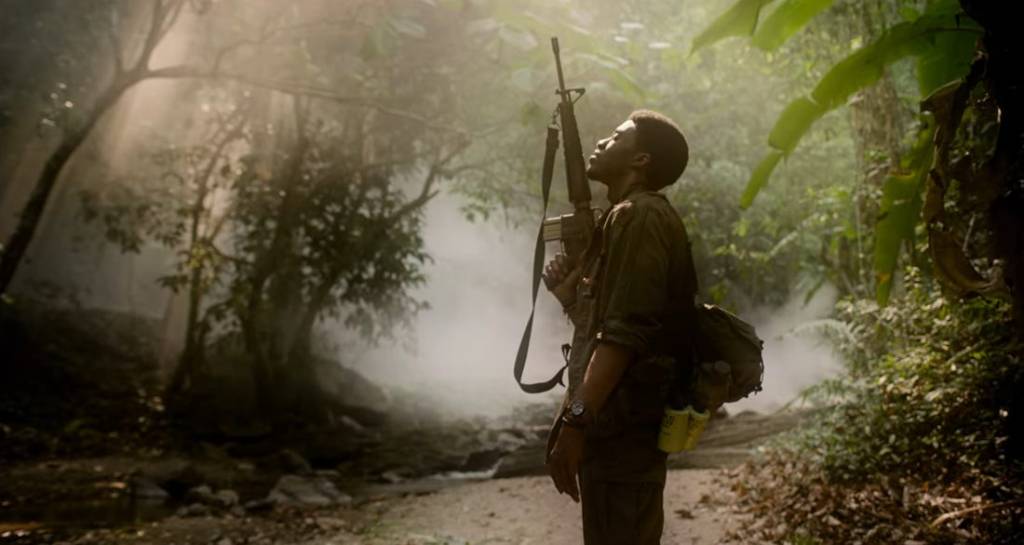
Pretty much a recent Spike Lee picture: Uneven, occasionally ham-fisted, at once clear-eyed and complicated, never less than engaging. The film is at its best when focusing on the twin trauma and exploitation of black soldiers and the Vietnamese, and most of all when it cedes space to Lindo’s astonishing, truly terrifying performance. For Lee, the donning of the MAGA hat is the first step towards the madness he falls into in the jungle, just as twisted a response to a lifetime of self-loathing as anything else he does in the film. That racialized PTSD is Lee’s main contribution to the compendium of guys-going-crazy-in-the-jungle tropes that he indulges in here, but the sense of history and uneasy solidarity between the Bloods is very strong. My reservations come in at the film’s relationship to the war itself- not that we need another guilt-ridden cinematic condemnation of Vietnam, but Lee never registers an appropriate sense of the devastation it wrought. Sure there are a few Vietnamese yelling at the Bloods about their murdered relatives, but the eventual villainization of Jean Reno’s VC-coded gang shows us that the film hardly shares their perspective (though it’s worth mentioning that even they are still being exploited by foreign capital interests). It’s interesting that Spike recently responded to a dumb Paul Schrader question about Custer by saying he would make a film about him from the Native Americans’ perspective when he shows little interest doing the same for this conflict. But then again, there are other Vietnam films I love that don’t do that whatsoever, and who knows if I would even expect it from a white filmmaker without Spike’s political bona fides. Still, the ending sequence’s eagerness to tie everything together much too conveniently gives you a good sense of the film’s issues. Spike’s work has been riding the line between easily digestible politics and a more confrontational stylistic idiosyncrasy for a while now, and the indelible images of Lindo stalking around the jungle and Peters’ regretful eyes are proof of the primal but thought-provoking power his cinema is still capable of.
 BRADHANFORD.com