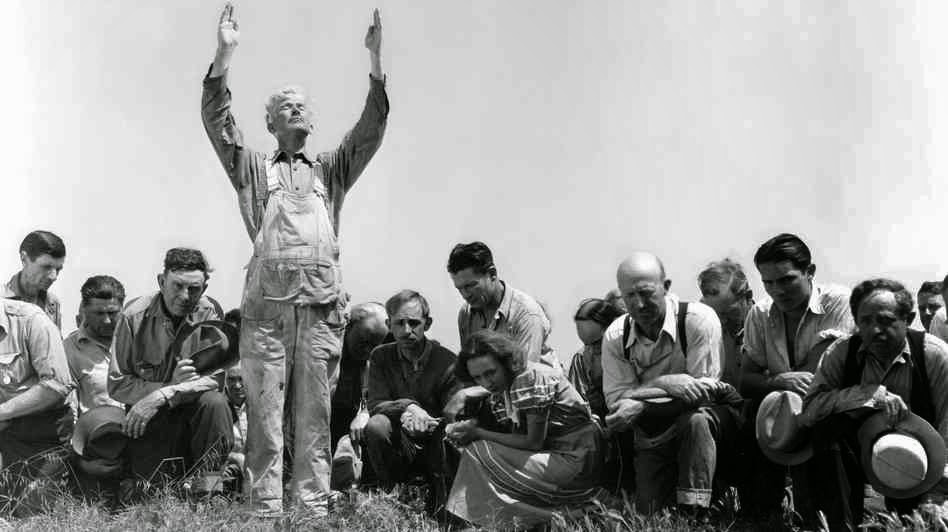
I guess you could point to the government formation scene and call this politically confused, and you wouldn’t necessarily be wrong, but I think the whole point of the movie is the rejection of discursive ideology and replacing it with pure action that is itself political. While the farm rejects socialism in name, what they are enacting through their labor, their solidarity and their rejection of every tenet of capitalism is the pure socialist ideal. It’s that unflagging devotion (from both Vidor and his characters) to a communitarian way of life that makes this one of the most truly radical films of its time, intentionally or not. Not without its flaws, from Keene’s performance to the useless love triangle and its troubling conflation of sexual libertinism with capitalist temptation, but its sweeping, deeply committed humanity is ultimately overwhelming. The justly celebrated final montage takes Eisenstein to a sacred yet wholly human place; the entirety of political struggle sublimated into a woman replacing a faltering man in the shovel line, the earth that they sow floating up and becoming the air itself.
 BRADHANFORD.com