- Based on US commercial release date, or the closest thing to it- not world premiere
- Still a lot of blind spots left to cover, but the main ones are: Titane, Parallel Mothers, The Disciple, Azor, Limbo (Soi Cheang), Red Rocket, France, and The Tragedy of Macbeth. This list is subject to editing without explanation.
- HMs: Her Socialist Smile (John Gianvito), Days (Tsai Ming-Liang), Cry Macho (Clint Eastwood), Memoria (Apichatpong Weeresethakul), The Souvenir: Part II (Joanna Hogg), Malignant (James Wan)
- Overall- better than last year!

25. Red Post on Escher Street (Sion Sono)
Sion Sono’s latest movie about movies finds him in an unusually light mood, tracking the various threads involved in the casting and eventual shooting of a hotshot director’s newest film. Even as the film’s bubbly mood turns to a more honest accounting of the exploitation inherent in the film industry power structure, the generosity and freedom of Sono’s film proves there may be hope for it yet.

24. We’re All Going to the World’s Fair (Jane Schoenbrun)
Jane Schoenbrun’s debut feature follows a young, utterly alone rural teenager (Anna Cobb) as she goes down the rabbit hole of an ominous online game and the perilous digital-emotional relationships that come with it. It’s been called a horror movie, and the film does go to frightening places, but Schoenbrun’s film actually goes for a much more sensitive and forgiving account of what it means to have something as terrifyingly bottomless as the Internet mediating our every reach beyond our own isolation. Not sure it sticks the landing, but it’s nice when a movie is clearly made by someone who knows what they’re talking about.

22. Short Vacation (Kwon Min-pyo, Seo Han-sol)
I had heard basically nothing about this film or its directors going in, but its hook (four South Korean teenage girls take their local train to the last station in an attempt to photograph “the end of the world”) seemed hard to screw up. Much of the movie’s appeal lies in the sharing of its characters’ casual outlook- we worry more as it grows increasingly clear that the girls are lost, but the movie never tells us to. The last stretch, in which the girls hilariously but touchingly reminisce on their short lives, is a highlight of the year.

22. Old (M. Night Shyamalan)
At the risk of repeating the truisms about this movie/Shyamalan in general (direction good, screenplay bad, beginning good, ending bad), I’ll just say that this is M. Night’s most physical movie, not only in its focus on the human body but on how the cinema transforms and manipulates a physical space. When Shyamalan has the juice there are few Hollywood filmmakers who can match his sense for camera movement, offscreen space and how they function as visual suspense storytelling, and the success of Old lies in how much it plays to those strengths. This comes with the caveat that I saw it very poorly projected.

21. The Matrix Resurrections (Lana Wachowski)
The films of the Wachowskis are often less a matter of taking the good with the bad than the transcendent with the insufferable. After a capital-G Great first hour, a thrilling corporate IP hall of mirrors that integrates the series’ ideas into film form as none of the other sequels have, we immediately take a hard left turn into the turgid exposition and philosophizing that mark all of their worst moments. It picks up again in the third act, but nothing can match that first hour, a Gremlins 2– esque assault on Warner Brothers and the Hollywood IP machine that (correctly) posits the endless repackaging and depersonalizing of artistic works as nothing more than a device of control and conditioning, a dream world stretched over our eyes by capital while it extracts our very life blood. Speed Racer should go down as the Wachowskis’ ultimate statement about their own relationship to Hollywood, but Lana’s companion piece is equally fascinating, a look at what happens when one of our most morally grounded film artists finds herself working with the monsters after all. As Luc Moullet said, “on fascism, only the point of view of someone who has been tempted is of interest.” Too bad the action sucks.

20. Zeros and Ones (Abel Ferrara)
Abel Ferrara makes a COVID movie. In this case, that means an intense, radical series of images that sketch out only that barebones of a plot, something about a photographer working for some ominous fascist force and his twin brother, a left-wing terrorist (Ethan Hawke tags in for Willem Dafoe to play both). Anyone looking for an espionage thriller will, of course, be shocked and horrified, as Ferrara instead offers what’s largely a nightmarish journey through the emptied streets of Rome as shot by the great Sean Price Williams. The film updates Ferrara’s great New Rose Hotel for a world where the dissolving digital image has become our entire world, where the larger forces at work have become almost entirely incomprehensible, just flashes on a screen until they’re breaking down the door. Sound familiar?

19. The Power of the Dog (Jane Campion)
For me, the biggest script-direction divide of the year. Campion’s images and camera movement produce as many jaw-dropping shots as any movie this year, and not just of the dully, passively beautiful kind. Beyond her mastery of formal fundamentals, her compositions open themselves up to experience and feeling in a way that the script, which despite its colorful dialogue ultimately whittles the vast power of the images into predictably narrow character motivations and thematic observations, never does. It does manage to make Benedict Cumberbatch interesting, though, which is no mean feat.

18. All Light, Everywhere (Theo Anthony)
Baltimore-based documentarian Theo Anthony’s films operate on a fusion of two forms- one, a grounded political documentation of the practical impacts of his films’ subjects, and the other a more abstracted digital/filmic inquiry into said subjects. The two go particularly well together in this, an exploration and condemnation of the American surveillance apparatus and its role in the total subjugation of the American public along class and race lines. Anthony’s ultimate observations may not come as a surprise, but he captures plenty of great moments along the way, and most importantly thinks through his images and their associations in a way that feels refreshingly rich for nonfiction filmmakers.

17. The 8th Annual On Cinema Oscar Special (Eric Notarnicola)
The annual spot for On Cinema at the Cinema, the best and truest media satire of the last decade. This year’s edition of the web series’ annual live Oscar special takes its formal experimentation to a new level, consisting of two simultaneous specials hosted by dual psychopaths Tim Heidecker and Gregg Turkington. While the 8th edition didn’t quite go to the same end-of-cinema/civilization place as last year’s special, it remains an unmissable, truly mind-breaking spectacle.

16. This Is Not a Burial, It’s a Resurrection (Lemohang Jeremiah Mosese)
A thought I had while watching this: perhaps the main story here, about an old Lesotho woman who refuses to move from her home to allow the area to be flooded to make a reservoir is a little played out- the one stubborn old battle-axe who won’t give in to modernization. But even if it is, I certainly tolerate seeing the same plots over and over again in other genres- Westerns, for instance. So if I enjoy seeing those (admittedly, colonizer) narratives repeated, why not this, which is in effect a basic anti-colonial narrative? Mosese’s truly gorgeous images, fusing portraiture, physical experience and incantatory storytelling, more than make the case.

15. The French Dispatch (Wes Anderson)
I underrated this at first. The initial disappointment at the lack of a strong emotional throughline to this led a lot of people to think it’s just more Wes Anderson bullshit, to which I say- if an astonishing, deeply varied and resourceful visual imagination combined with a brilliant eye for human behavior, a laugh-out-loud sense of humor, and an emotional conviction that portrays the deepest reservoirs of courage, sacrifice and resistance is bullshit, sign me up for more. I get the frustrations with some of this, the second episode in particular leads Wes into some of his worst tendencies and the whole project may seem a little out of touch amidst the end of the world, but every shot of this makes the argument for Wes’ tying of artistic expression to political resistance better than any number of cutesy New Yorker allusions.

14. Wife of a Spy (Kiyoshi Kurosawa)
No 2021 movie had a better pedigree than this, directed by Japan’s greatest living filmmaker and written by its current belt holder (more on him later). What emerges is a terrific riff on Hitchcock’s Sabotage, from its inquiry into the politics and deceptions of marriage to the idea of cinema as both weapon and distraction (it comes as no surprise that Kiyoshi made the most fire fake amateur crime film of the wartime era). At its best when Kurosawa’s digital textures give way to physical experience and emotion, nowhere more so than in its tremendous epilogue. The movie shouts out Sadao Yamanaka but its final shot is pure Mizoguchi, bracing in its despairing and conflicted perspective on both Japanese history and the film preceding it. A tough note to end on, but especially welcome in this era of wrapping everything up in tidy bows.

13. Procession (Robert Greene)
Credited not only to documentary/fiction hybridizer Robert Greene but to the subjects of the film itself, Procession tracks six men, all survivors of sexual abuse at the hands of the Catholic Church, as they make their own short films in collaboration with the director in an attempt to reckon with the trauma they’ve experienced. The film is more about process than results, about what happens when you give your movie over to the people you depict, when you make the cinematic process itself one of healing (or, potentially, further damage).

12. The Card Counter (Paul Schrader)
Look, if you know Paul Schrader’s whole thing you don’t really need me to sell this to you. God’s lonely man, the sins of America, a diary, Bresson, the Pickpocket ending, you know the drill. What’s really stuck with me from this, oddly, is the Tiffany Haddish performance and the sequence with her and Isaac in the light garden or whatever- for all his obsessive retreading, Schrader still finds pockets of humanity that are unlike anyone else’s. I can’t claim to know what’s going on in the man’s mind palace, but his ideas about what makes the world beautiful can occasionally hit just as hard as his understanding of what (and who) makes it so brutal.

11. Benedetta (Paul Verhoeven)
My first NYFF viewing since Zombi Child way back in October 2019, and a laugh riot it was. Benedetta is a worthy meeting of Verhoeven’s filmic and historical obsessions, maybe a little more schematic and less image-driven than his best, but it’s so impassioned, clever and purely entertaining on a scene-by-scene basis that it hardly matters. As others have said, its sincerity is its real subversiveness. Also, Paul Verhoeven shooting a plague movie in 2019 and then putting it out in 2021 officially moves him from prescient to psychic.

10. All Hands on Deck (Guillaume Brac)
Everything a summer vacation movie should be- breezy, funny, touching, full of imagination and possibility, always with a slight threat of everything going wrong. The plot begins with the dorky Édouard agreeing to carpool to a vacation spot with friends Félix and Chérif, only to get stuck there once Édouard’s mom’s car breaks down. Brac uses the two friends’ Blackness to perfect, unstated effect in the wealthy, white French countryside, and Salif Cissé gives what may be my favorite supporting performance of the year as Chérif (his first screen role, as far as I can tell), particularly in the final stretch of his character’s exquisitely felt romance. A joy.

9. West Side Story (Steven Spielberg)
I could flex on everyone who thought this would be bad, but predicting that “a Steven Spielberg musical” would own doesn’t feel hard. Insert the Richard Ayoade line about wanting to bring cinema back to movement, color, emotion, etc from The Souvenir: Part II here. Is it too late to switch out Mike Faist for Timotheé in our cultural consciousness?

8. Undine (Christian Petzold)
The best kind of “minor” movie. Petzold puts all his talent for imagining alternate personal and political histories into the tale of Undine (Paula Beer), a Berlin historian whose burgeoning romance becomes intertwined with her namesake water-sprite myth. All of Petzold’s movies are in some way about how the truths and fictions of the last century of European crises emanate through this century’s; Undine is a worthy addition to his essential cinematic project. Bonus points for a great Mission: Impossible (1996) homage.

7. What Do We See When We Look at the Sky? (Alexandre Koberidze)
Opting to sell this less as a two-and-a-half-hour Georgian festival movie and more as a fairy-tale rom-com which includes several long digressions about the relationships of various dogs in the town where it takes place, namely their differing tastes in soccer bars. An expansive, generous, playful, deeply romantic antidote to the parade of realist arthouse dullness, one of the movies I’m happiest I took a chance on this year.

6. Hold Me Back (Akiko Ohku)
The other movie I was happiest to take a chance on this year. As I look at my favorites of the year, the thing they seem to have in common is a sense of freedom- formal, tonal, emotional, thematic- that runs counter to the sheepish, overdetermined “realism” that seems to be the standard in both studio and indie filmmaking. That freedom is largely what distinguishes this, a rom-com that essentially consists of 130 minutes inside the head of the anxiety-riddled Mitsuko (Rena Nōnen, possibly the performance of the year), as she attempts to replace her dependency on the calming voice inside her head that she refers to as “A” with (gasp!) a healthy human relationship with a nice young man. Ohku’s film is alternately hilarious and suffocating on the subject of its protagonist’s anxiety, yet so suffused with romantic longing and the possibility of connection that it qualifies as one the great feel-good movies of recent years.

5. Wheel of Fortune and Fantasy (Ryûsuke Hamaguchi)
Don’t want to spend too much time on this one, as (just like in every other 2021 list), we’ll be hearing more from Hamaguchi further on up the road. Still- how often do we get an anthology film with no weak entries??? Heroic.

4. Licorice Pizza (Paul Thomas Anderson)
I’m not above being pandered to.

3. Annette (Leos Carax)
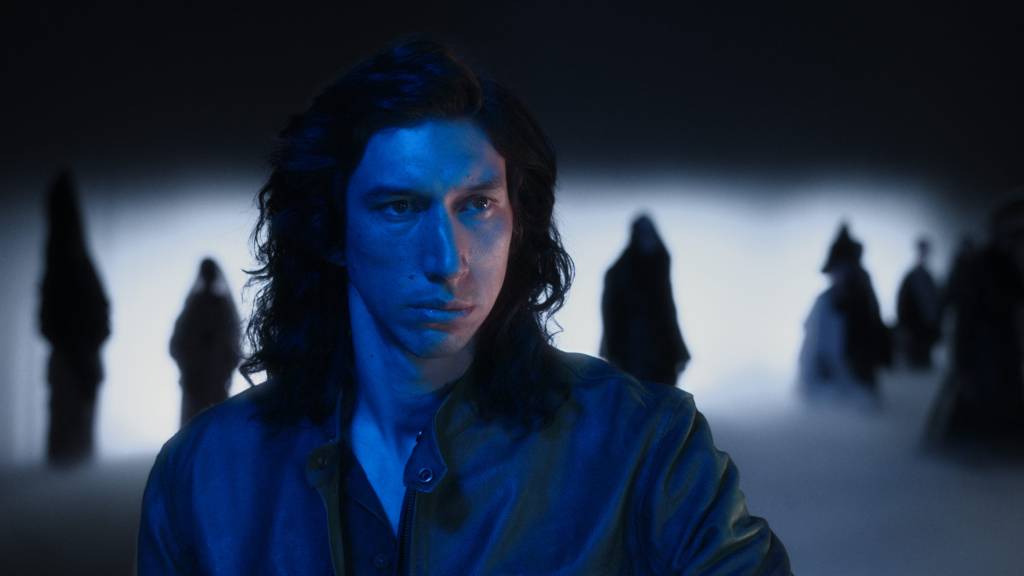
With each passing year, the idea of making movies out of the things movies are made out of- images, sounds, colors, movement- becomes increasingly distant. Leos Carax’s exhilarating return, a musical written by Ron and Russell Mael of Sparks, proves that what was cool in the 1920s is cool in the 2020s. Playing out as a symphony of narcissism, spectacle and alienation, the film follows stand-up comic Henry (Adam Driver, giving a career-best performance as the 21st Century Schizoid Diceman), his wife, opera singer Ann (Marion Cotillard), and the birth of their daughter Annette, whose ability to sing with perfect pitch as a newborn is among her relatively ordinary qualities. Carax’s subject of annihilating love has reached its darkest point in Annette, while the galvanizing cinematic world he creates around it has rarely felt so in touch with our own culture of images. You can flinch from it or you can embrace it, but you can’t deny it: this is pure cinema.

2. Drive My Car (Ryûsuke Hamaguchi)
I’ve hardly read a sour word about this movie from any corner of cinephilia, so I’m content to let Hamaguchi take his victory lap here. How satisfying, though, to see a filmmaker who’s been uniformly brilliant since his entry to the world stage (2015’s Happy Hour) be so rightly acclaimed for making what feels like his intentional masterpiece. It seems that every year we get a new crop of acclaimed movies that are “about grief and trauma,” which generally means that they slap one Twitter-approved idea or metaphor on top of an otherwise rote movie and call it a day. Hamaguchi’s film, by contrast, uses the grief of main character Yūsuke (an unforgettably hangdog Hidetoshi Nishijima) not as a narrowly imagined Theme but as an avenue to an entire world- one of creation and collaboration, of the pursuit of truth through fiction, of art and life merged in a way that feels not precious or pretentious but open, restorative, free. After a note-perfect extended prologue, the film (based on a Haruki Murakami short story) follows Yūsuke, a respected theater actor and director, as he spends a season in Hiroshima producing an experimental, multilingual staging of Chekhov’s Uncle Vanya. The title refers to Yūsuke’s red Saab, which he reluctantly allows the theater company-provided chaffeur Misaki (Toko Miura, every bit as great as Nishijima) to drive him around in. The relationship that results, like those between Yūsuke and his actors, is defined by Hamaguchi’s belief in the ability of fiction to arrive at moments that feel like emotional miracles, a perfect union of dramatic precision and possibility. Maybe it’s just my contrarian impulse to deny this the top spot, because as it stands now everyone else is playing for second place with this guy.

1. Love Affair(s) (Emmanuel Mouret)
Timeliness is the most overrated quality in cinema. Not in the sense that it’s inherently bad, but in the tendency of the culture at large to value prosaic commentary on the issues of the day over works of true inspiration. Love Affair(s), released in France under the equally terrible title The Things We Say, The Things We Do, could have been made by Sacha Guitry in the ’30s, or Jacques Demy in the ’60s, or Alain Resnais in the ’80s. It could not possibly have less to do with the world at large right now. And yet, no movie made me feel more in thrall to the eternal pleasures of the movies this year than Emmanuel Mouret’s comedy of romantic entanglement, which follows six or seven young men and women through a nested flashback structure as they slide in and out of affairs and attractions to each other. Like Demy, Mouret films romantic attraction as an effortless ballet of bodies (and no film this year had a hotter cast), but his inquiries into both the practical and theoretical elements of monogamy establish him as a first-rate cinematic anthropologist. Like Drive My Car, Love Affair(s) evinces above all a belief in the power of spinning tales to arrive at ecstatic emotional truths, but its emotional world is far too rich to leave their consequences behind. For every joyous union, a broken heart lies just on the other side of the next cut. The best part about this movie, though? I have no way of ending this list by tying it in to a greater point about 2021. It has nothing to do with 2021, which is why it’s a masterpiece.